BD monogram

Indoor/outdoor display

I've had the good fortune to do a bunch of display work over the years, everything from single-shot billboards to complex installations. These projects always require a lot of communication, planning, coordination, and the ability to change plans on a dime when it turns out the power you were promised isn't available or the measurements were slightly off. But it's also some of the most rewarding work—being able to walk up and touch something you've created is a fantastic feeling.

WRI Ross Prize For Cities 5 Year Retrospective

2026

The WRI Ross Center Prize for Cities is a global award given to cities for projects that bring big ideas to critical urban challenges and deliver life-changing impact. Since 2018, the Prize has received more than 1,200 submissions across regions, sectors and issue areas, and awarded $250,000 to each winning city across five cycles.

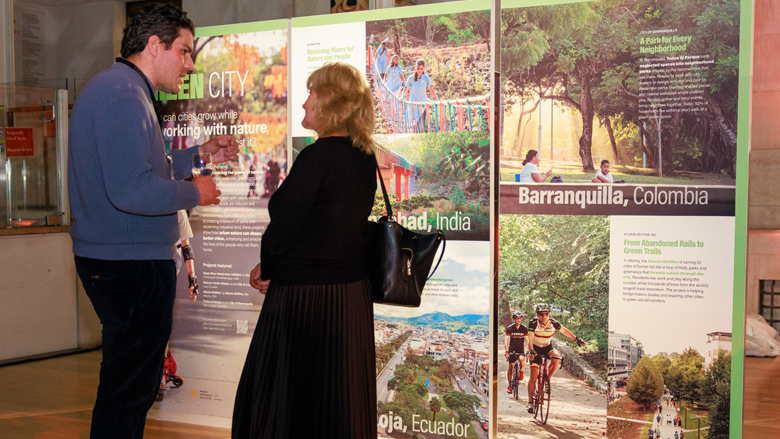
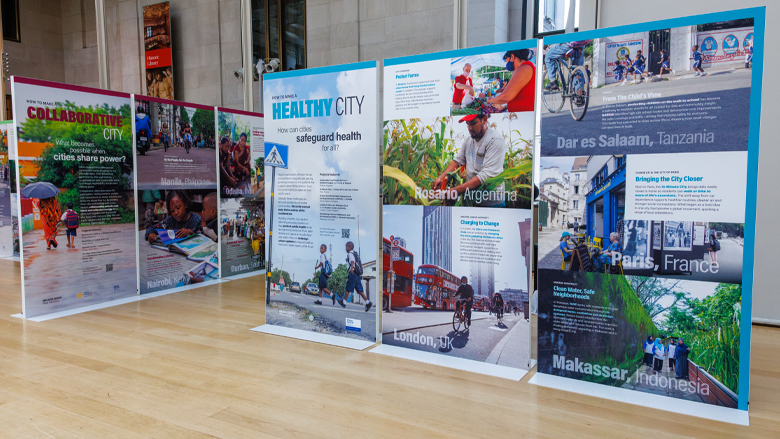
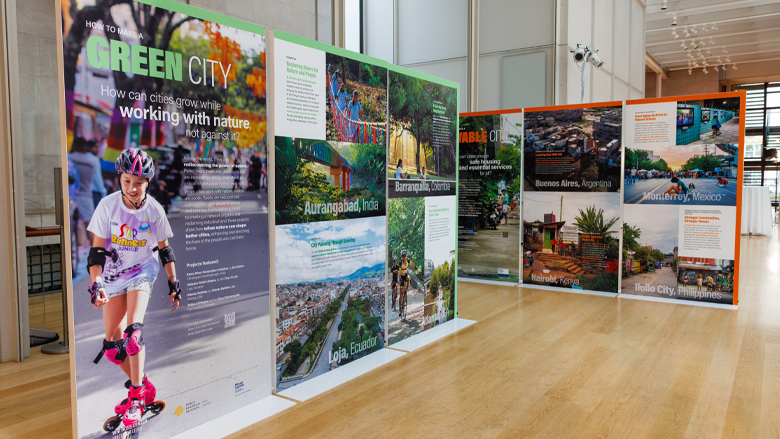
For the latest Prize event, I was asked to concept and produce a series of portable display panels to be installed at high-profile events in New York City and Yale University. The panels needed to be modular, high-quality, lightweight, and double-sided (no roll-up convention banners here), all while staying within a fixed budget. Working with a local vendor, we found a solution using collapsible aluminum channel with a fabric overlay. I designed a total of 18 panels to illustrate five themes of the Prize finalists.
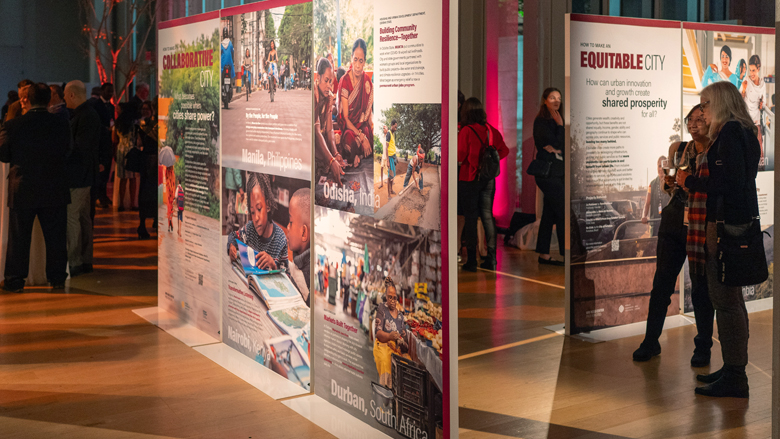
Installation day in New York City.
Cocktail hour during the WRI Ross Prize event.
The panels were later moved to the Yale School of Management for a 1-month show.

Stories That Changed The World

2025-2026

In 2024 I was asked by my CEO to research and produce a retrospective campaign focusing on WRI's legacy initiatives. With the Institute being over 40 years old, we found that new and existing employees, donors, and board members had no idea about some of our greatest achievements, and this was an opportunity to both educate and inform our key audiences as well as gather historical information about our work and alumni before it was lost for good.

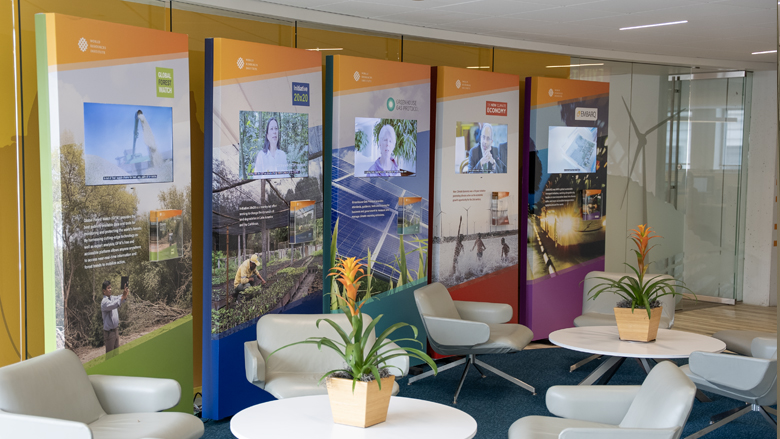
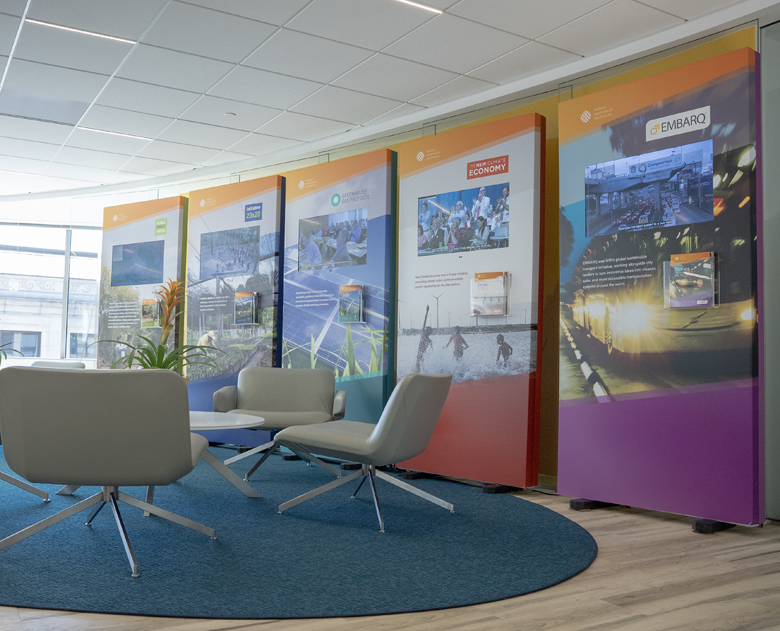
Beginning with three initiatives, I produced a video, brochure, website and display panel for each, followed by two more in 2026. Each panel is freestanding, with an inset television running cloud-based display software with their particular video on repeat, so that the panels can be moved and set up anywhere there's power and a wifi signal. After discussing options with the vendor, I provided my own sketches for construction and had them build each one to match. Each panel is pre-cut to accept a clear brochure sleeve.

My mockup of the panel design for internal grant approval.
My construction sketch for the vendor.
Final installation of all five panels in the WRI lobby.

Courage to Lead

2014, 2017, 2019

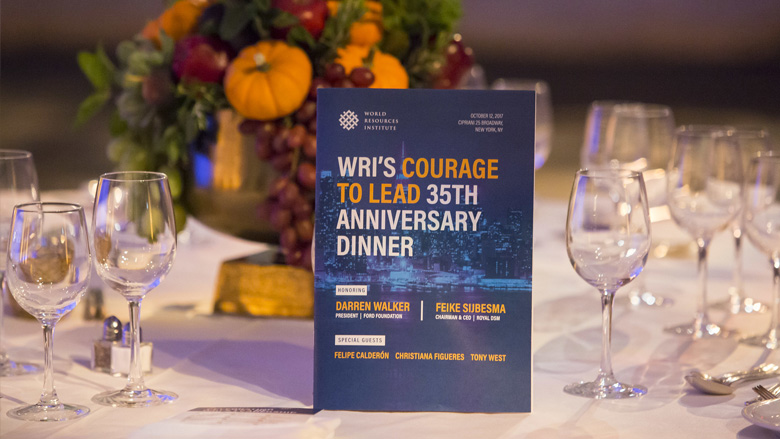
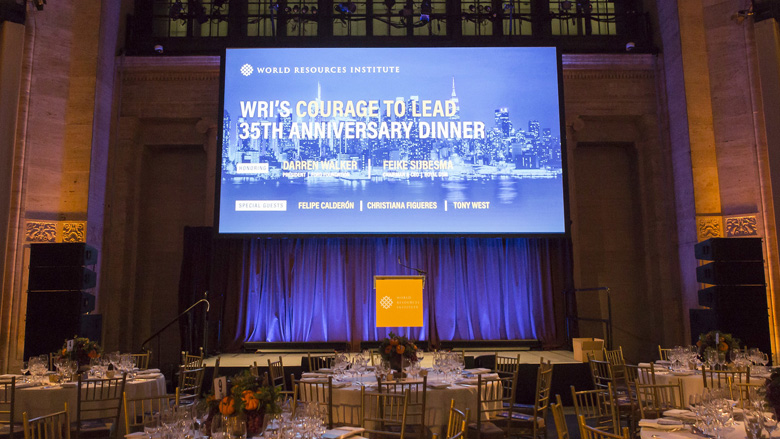
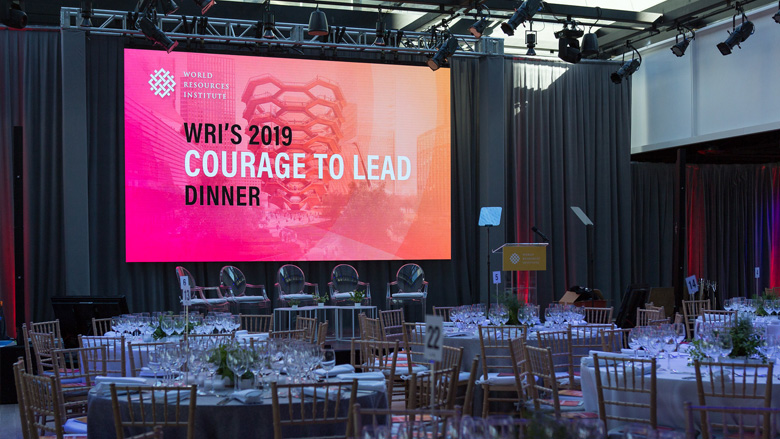
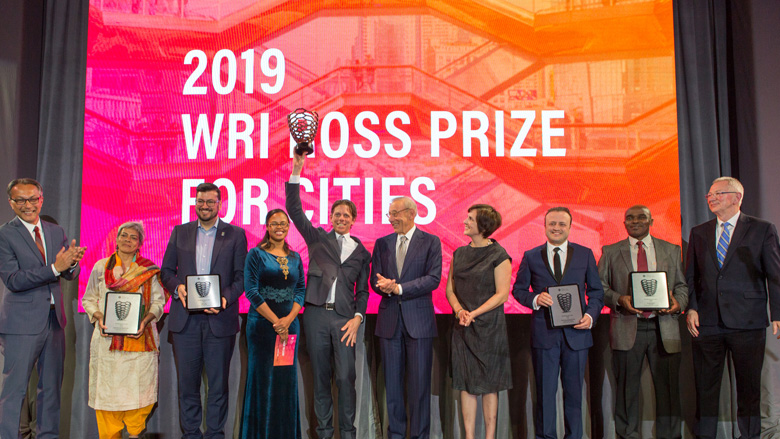
For WRI's recurring fundraising dinner, Courage to Lead, I developed the visual brand and all of the materials, from save-the-date mailers to motion graphics for each presentation, plus wayfinding and informational displays. In 2014 we honored Board members Jim Harmon and Pam Flaherty, with Hillary Clinton as a featured speaker. In 2017 we honored Darren Walker and Feike Sijbesma with former Mexican President Felipe Calderón as guest speaker. The 2019 dinner honored Dan Doctoroff and Frannie Léautier. This event ran concurrently with the first WRI Ross Prize for Cities award, which added an extra level of branding complexity. The dinners drew roughly 350 guests each and raised between $700,000 and $1 million each.

Each event was held in New York City, which required close coordination with each venue, their chosen vendors, and our internal development team. On the day of each event, I was on hand to set up and coordinate the visuals, and during each event I shot stills and video. Afterwards I coordinated with outside editors to cut sizzle reels for social media and other post-promotion.

Each of the events drew over 300 guests and a series of world leaders as featured speakers.
In 2017, we were still leaning heavily on PowerPoint decks.
The 2019 event was held at Hudson Yards in New York City.
In 2019 we upped the game, standardizing on looped video files for all of the visuals, switched from a desk at the back of the room.
On the day of the event, my role was to shoot still photography and manage group photos.
For each of the events, I shot still photography for post-event publicity.
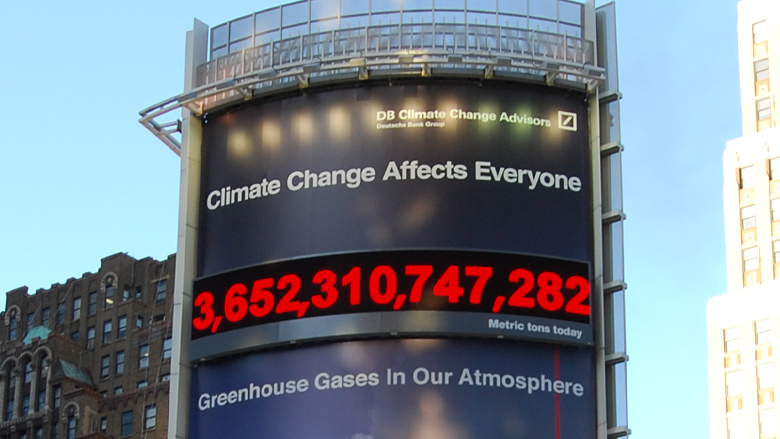
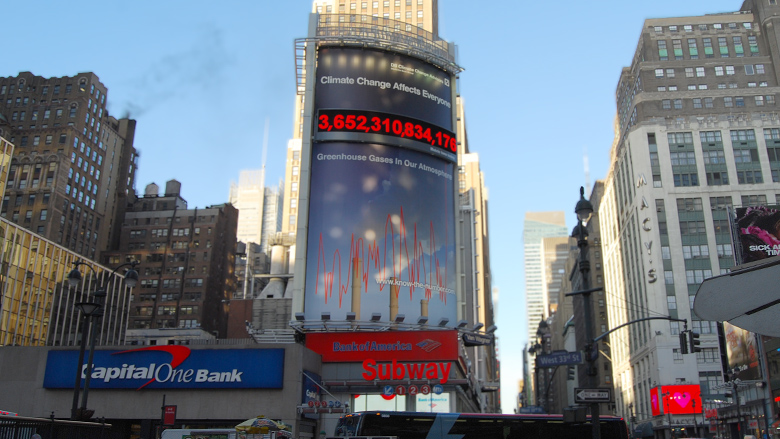
Closeup of the 37-by-70-foot billboard in New York City, featuring the Carbon Counter I designed.

Deutsche Bank Climate Change Advisors billboard and microsite

2009

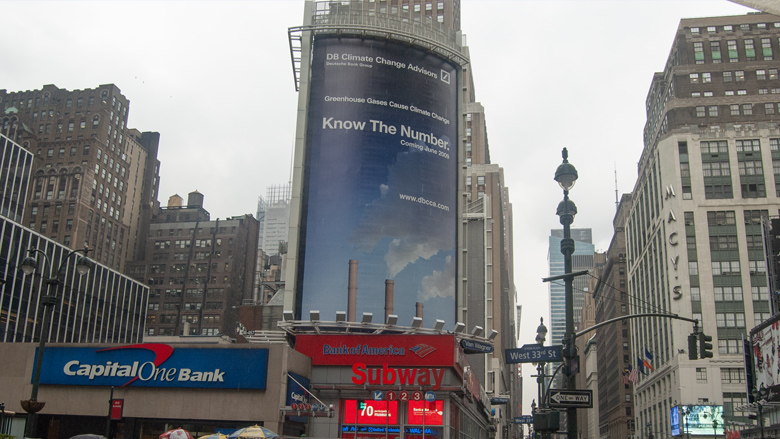
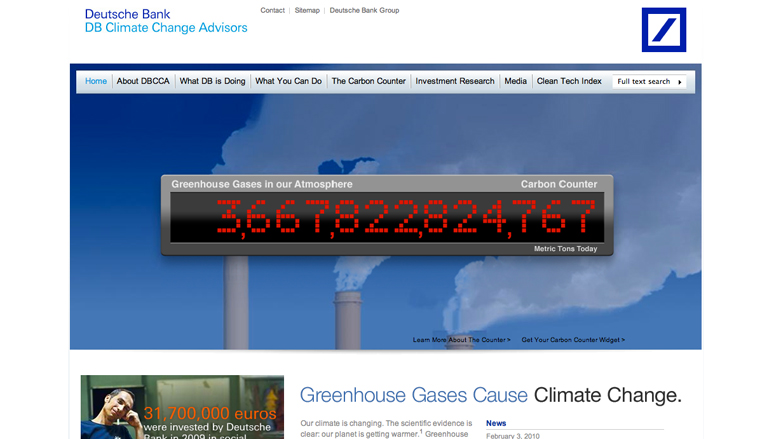
In 2008, Deutsche Bank approached my agency idfive to concept and design a billboard in New York City, promoting a new division focused on investments in the climate change space. Working with their team, we proposed a carbon counter, showing how many tons of CO2 were being emitted into the atmosphere in real time. Working with climate scientists from MIT, they developed an algorithm to calculate the numbers, and I designed a physical display to visualize them as well as the website and a downloadable counter widget.

A digital display was fabricated and installed at the top of a 37-by-70-foot billboard at the corner of Seventh Avenue and 33rd Street, outside Madison Square Garden. Using low-energy LEDs and carbon credits, the sign was certified carbon-neutral. The display, connected to a dedicated computer, updated the number in real time.

The sign and its website made the front pages of the MIT, Fast Company, CNBC, Wall Street Journal, Scientific American, USA Today, and Crain's websites the day it was unveiled.

This campaign won 2009 Gold (Outdoor Board) and Silver (Mixed Media Consumer) Addys from the Advertising Association of Baltimore, as well as Best in Maryland from the Public Relations Society of America Maryland Chapter.

The teaser billboard was installed for several months at Seventh Avenue and 33rd Street in Manhattan.
The initial installation was a "coming soon" placeholder with a URL that led to a teaser website.
The final Carbon Counter billboard replaced the teaser billboard, featuring a specially constructed Carbon Counter tallying the amount of emissions released into the atmosphere.
The finished sign after installation. An estimated 500,000 commuters passed the sign every day for two years.
The companion website featured a companion counter and a downloadable Counter widget.
The associated website featured a downloadable counter widget, which pulled the current calculation in real time.
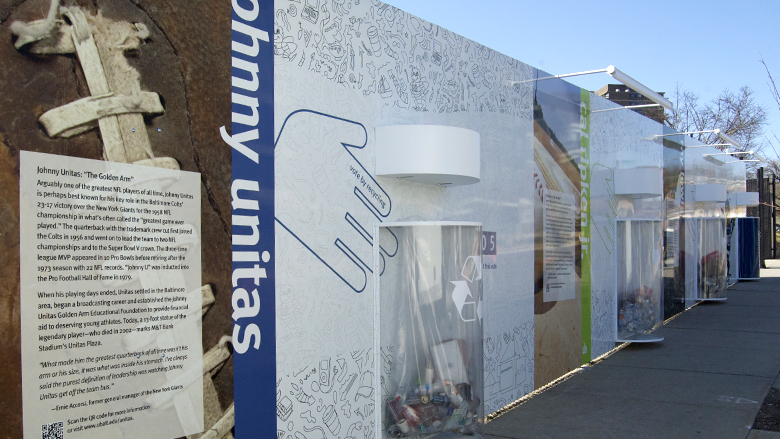
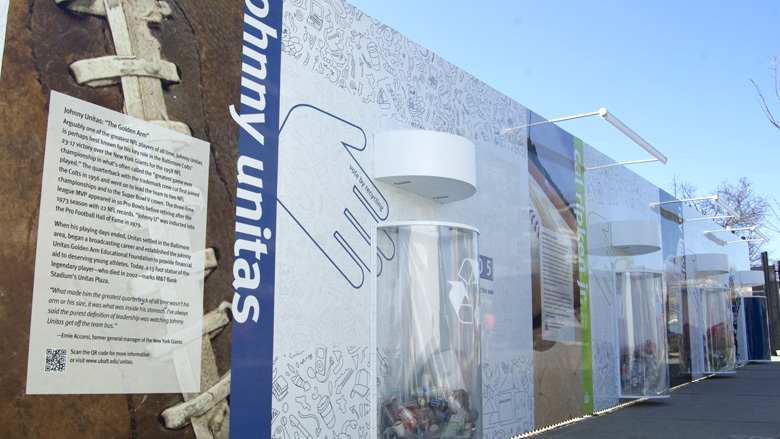
The installed recycling wall on the University of Baltimore campus, showing the first voting cycle: favorite Baltimore sports figures.

University of Baltimore Recycling Wall

2011

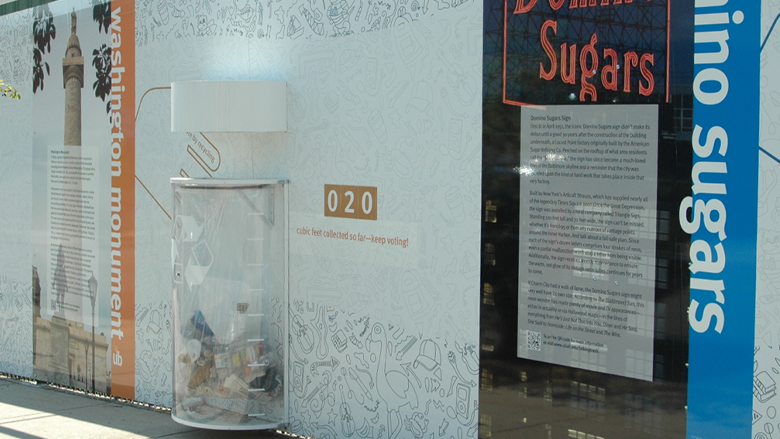
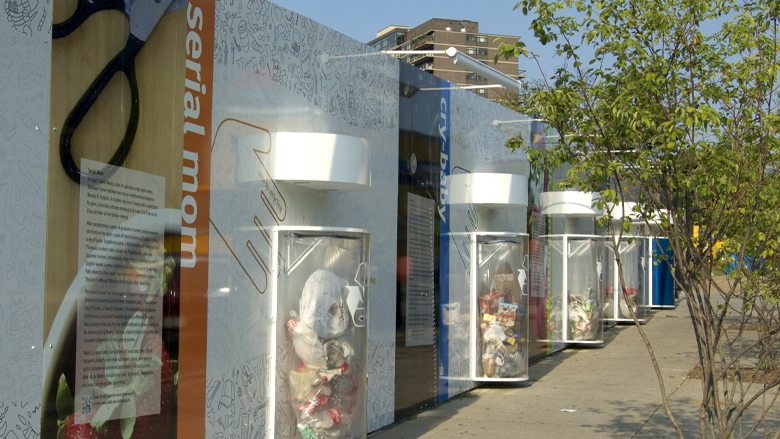
During a period of construction on the University of Baltimore's campus, idfive was asked to develop some advertising concepts for a 110' wall along a busy side street. The client chose one of our more unusual ideas: an interactive display wall asking passers-by to choose one of four options and vote—using their recycling.

With the go-ahead, we developed several Baltimore-based themes: Favorite sports figure, landmark and John Waters movie, and took photos for each selection. Working with a local display company, we designed receptacles with tamper-proof lids, illuminated from above, and lit the sidewalk (a happy side benefit of running power to the wall, providing more safety for students). The wall was updated every two months, and a page on the UB website kept track of the leaderboards. The wall also detailed UB's overall recycling efforts as well as the total amount of recycling it collected during the campaign.

Passers-by were encouraged to vote   by placing their recycling in one of five containers, which were then weighed to determine the winner.
The first series featured famous Baltimore sports figures.
I shot all of the photography for this project.
The second asked bystanders to rate Baltimore landmarks.
Each voting cycle was a Baltimore-based theme: Favorite sports figure, landmark and John Waters movie.
The third put the films of John Waters to the test.

University of Baltimore Campaigns

2009-2012

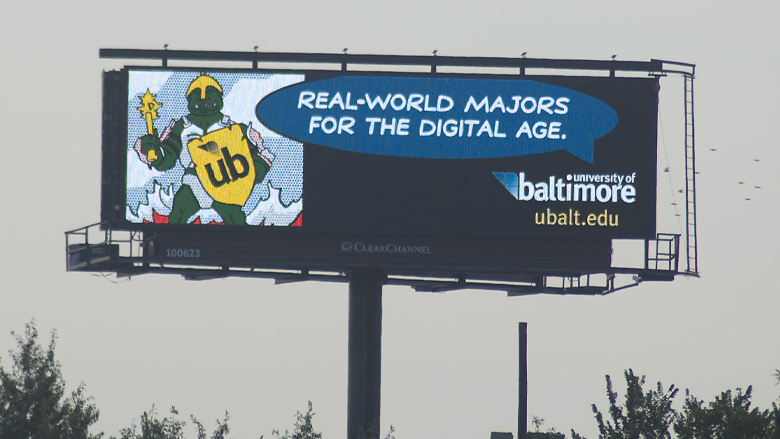
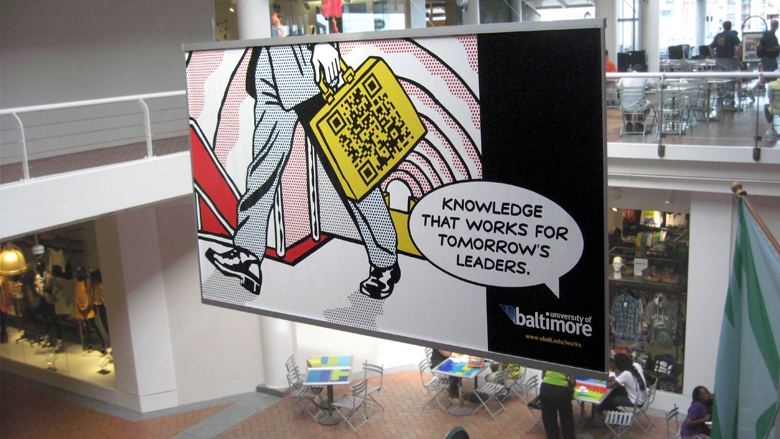
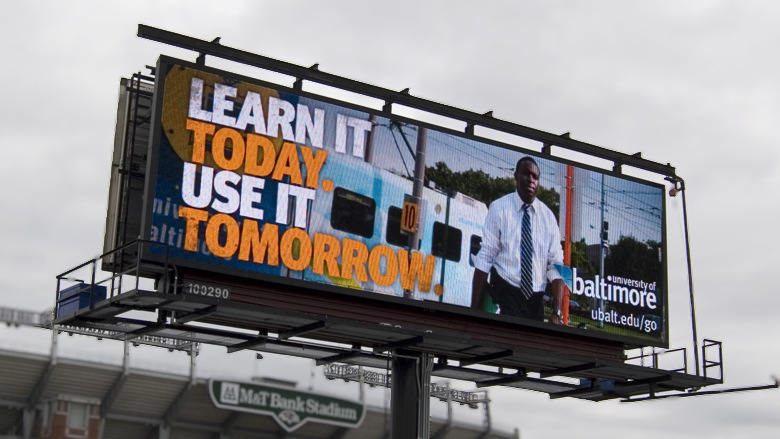
As part of a four-year engagement, idfive was asked to develop recruitment campaigns for the University of Baltimore and several of its graduate programs. Moving away from the existing text-heavy, visually cluttered advertisements, we developed a campaign around simple 2-5 word phrases, setting them in the UB font and directing viewers to a specialized webpage. The second round featured a pop-art comic style, featuring a prominent and unique QR code depending on the format and location. The third round paired dynamic commissioned photography of UB students with bold type to put faces to the headlines.

Each campaign and URL featured unique UTMs to track reach and uptake, helping refine ad placement further as the engagement continued.

Bold captions and whitespace at the Baltimore/Washington Airport.
Pop Art hanging over the food court in the Baltimore Harborplace.
Real UB students over M&T Bank Stadium.